
✓ Conventional loan underwriting requirements
✓ How to refinance with a low credit score
✓ Strategies to increase your approval chances
Many homeowners want to lower their interest rate or access cash through refinancing, but feel stuck due to real-world limitations.
In the U.S., a credit-driven financial system, it’s true that your credit score plays a major role in mortgage approval. Because of this, many people give up before even speaking with an expert—simply because their score looks “too low.”
Here’s the good news: even with a credit score below 620, viable refinance options still exist.
Loaning.ai presents practical refinance solutions designed specifically for borrowers with low credit scores.
.
Is a 620 Credit Score an Absolute Requirement for Refinance?
Conventional loans are commonly said to require a minimum credit score of 620.
However, this number is a guideline set by Fannie Mae and Freddie Mac—not a hard rule that every lender must follow.
At its core, U.S. mortgage underwriting focuses on repayment ability.
Even with a lower credit score, you may still qualify if you have strong compensating factors. The key is finding a program that offsets your credit weakness. ✨
You may still have a strong chance if:
✓ You have sufficient home equity, resulting in a low LTV
✓ You have stable income and long employment history
.
Two Refinance Programs for Borrowers with Low Credit Scores
Not qualifying for FHA or VA loans doesn’t mean you’re out of options.
Below are two specialized programs that prioritize repayment capacity over credit score.
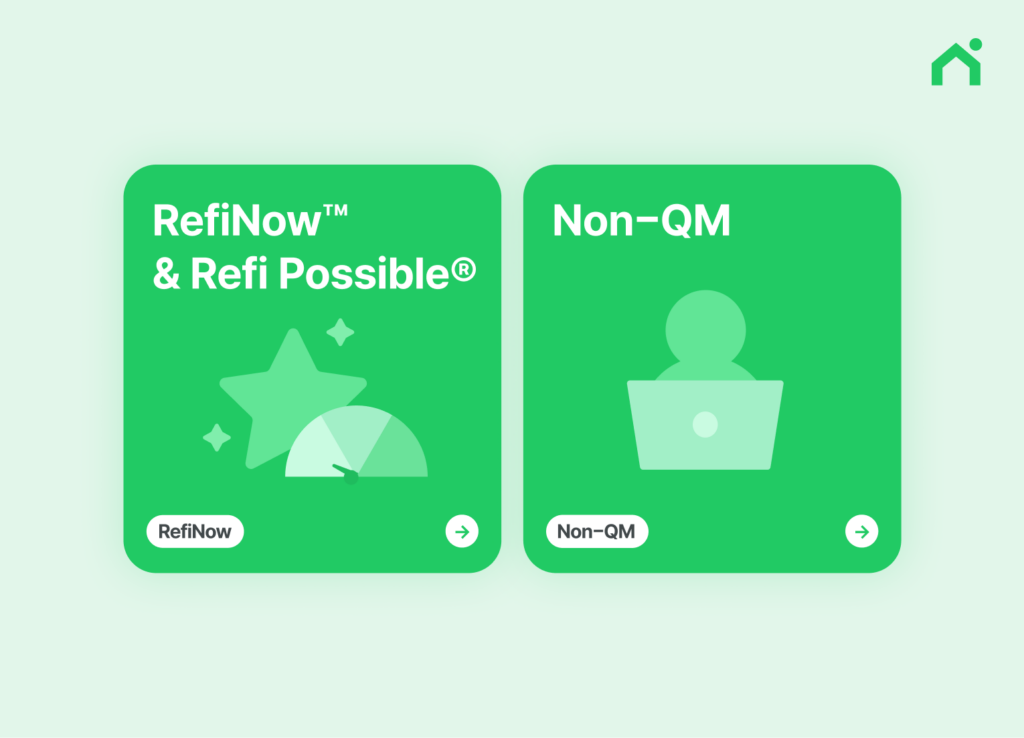
→ Special relief programs under conventional loans that many borrowers overlook.
✓ Eligibility: Household income at or below 100% of the Area Median Income (AMI)
✓ Key Point: Debt-to-Income (DTI) ratio may be approved up to 65%
✓ Requirement: If there has been no mortgage delinquency in the past 6 months, approval through the Automated Underwriting System (AUS) is highly likely
→ Loaning.ai offers loan solutions designed for borrowers without regular income.
✓ Eligibility: Borrowers with low taxable (reported) income
✓ Key Point: Even borrowers with recent bankruptcy history or very low credit scores in the 500 range may qualify
✓ Advantage: Income can be verified using bank statements instead of tax returns, making this option ideal for self-employed borrowers
.
How to Increase Approval Odds—Even with Low Credit
In addition to choosing the right program, the strategies below can significantly improve your chances of approval.
| Strategy Category | Details & Considerations |
|---|---|
| ① Co-signer |
Using a credit-qualified partner
Point
Instead of relying on the borrower’s low credit score, the co-signer’s credit and income are included in underwriting to strengthen overall stability.
Eligibility
A direct family member (parents, siblings, etc.) with a credit score of 740 or higher is ideal.
Note
The co-signer does not need to live in the property.
Caution
Since the co-signer shares 100% of the repayment responsibility, clear agreement in advance is essential.
|
| ② LTV Adjustment (Loan-to-Value Ratio) |
Risk Mitigation Through Higher Equity
Point
Increasing the borrower’s equity helps offset perceived default risk.
Recommendation
Adjust the cash-out amount to keep the LTV below 70%.
Effect
A higher equity position can significantly improve approval chances, even for borrowers with low credit scores.
|
| ③ Credit Freeze During Underwriting (No new credit activity) |
Prevent Further Credit Score Declines
Point
Do not open new credit cards or make installment purchases during the loan process.
Risk
A hard inquiry may change debt ratios and could lead to final approval denial.
|
.
How Much Does Refinance Cost?
“Won’t refinance fees be too expensive?”
Not necessarily. Refinance costs typically range from 2–5% of the loan amount, but with the right structure, they can be fully managed—and even eliminated.
Loaning.ai provides 100% transparent cost disclosure.
| Category | Current Loan(Before) | Option 1 |
Best Balance
Option 2(Recommended)
|
Option 3 | Option 4(No Out-of-Pocket) | Option 5(Cash Back) |
|---|---|---|---|---|---|---|
| Interest Rate(Rate) | 7.125% | 5.500% | 5.625% | 5.750% | 5.875% | 5.990% |
| APR | 7.125% | 5.547% | 5.634% | 5.762% | 5.840% | 5.918% |
| Monthly Payment(P&I) | $4,716 | $3,975 | $4,030 | $4,085 | $4,141 | $4,192 |
| Monthly Savings | – | $741 | $686 | $631 | $575 | $524 |
| Net Cost | – | $3,808 | $708 | $1,008 | -$2,692(receive cash) | -$5,692(receive cash) |
| Break-Even Period(BEP) | – | 5.1 months | 1.0 month | 1.6 months | Immediate savings | Immediate savings |
| Total Savings(30년) | – | $266,760 | $246,960 | $227,160 | $207,000 | $188,640 |
: These are administrative fees charged by the lender to process your loan.
✓ Underwriting Fee: The cost of thoroughly reviewing your income, assets, and credit.
✓ Processing Fee: The cost of preparing, organizing, and reviewing loan documents.
: These are mandatory fees paid to external professional service providers, not the lender.
✓ Appraisal Fee: Paid to a licensed appraiser to determine the home’s market value (typically $600–$1,000).
✓ Credit Report Fee: Paid to credit bureaus for obtaining your credit report.
: Required services to verify and protect property ownership.
✓ Title Insurance: Protects against ownership disputes or title defects (typically $600–$1,000).
✓ Escrow / Settlement Fee: Covers secure handling and transfer of funds during closing.
: These are mandatory taxes paid to the state or county.
✓ Recording Fees: Charged by the county to officially record the new loan.
Try using lender credits. By slightly adjusting the interest rate, you can receive a credit from the lender to fully offset the closing costs mentioned above.
It’s the smartest strategy to secure cash without paying anything out of pocket upfront.