When buying a home in the United States, many people assume they only need to consider the home price and the down payment. However, buyers often search for a closing cost calculator to estimate the additional expenses involved in a home purchase.
Closing costs include various fees required to complete a real estate transaction, such as loan approval, title transfer, and tax processing. Because of this, it is important for homebuyers to understand these costs before purchasing a property.
In this guide, we explain what closing costs are, what fees are included, and what homebuyers should expect when purchasing a home in the U.S.
What Are Closing Costs?
Closing costs are additional expenses that occur during the home buying process beyond the purchase price of the property.
When purchasing a home, several steps take place during the transaction process, including:
- Mortgage underwriting
- Home appraisal
- Title verification
- Contract preparation
- Tax and administrative processing
The service fees associated with these steps are collectively referred to as closing costs.
Because these costs come from multiple services involved in the transaction, the total amount can vary depending on the property, lender, and location.
How Much Are Closing Costs? Using a Closing Cost Calculator
In the United States, closing costs typically range from about 2% to 5% of the home price.
For example:
| Home Price | Estimated Closing Costs |
|---|---|
| $300,000 | About $6,000 – $15,000 |
| $500,000 | About $10,000 – $25,000 |
The exact amount may vary depending on several factors, including:
- State taxes and regulations
- Loan type
- Mortgage lender
- Home price
- Negotiated contract terms
Because these factors differ from one transaction to another, many buyers look for a closing cost calculator to estimate their potential expenses or speak with a mortgage specialist to understand the costs involved in their situation.
What Is Included in Closing Costs?
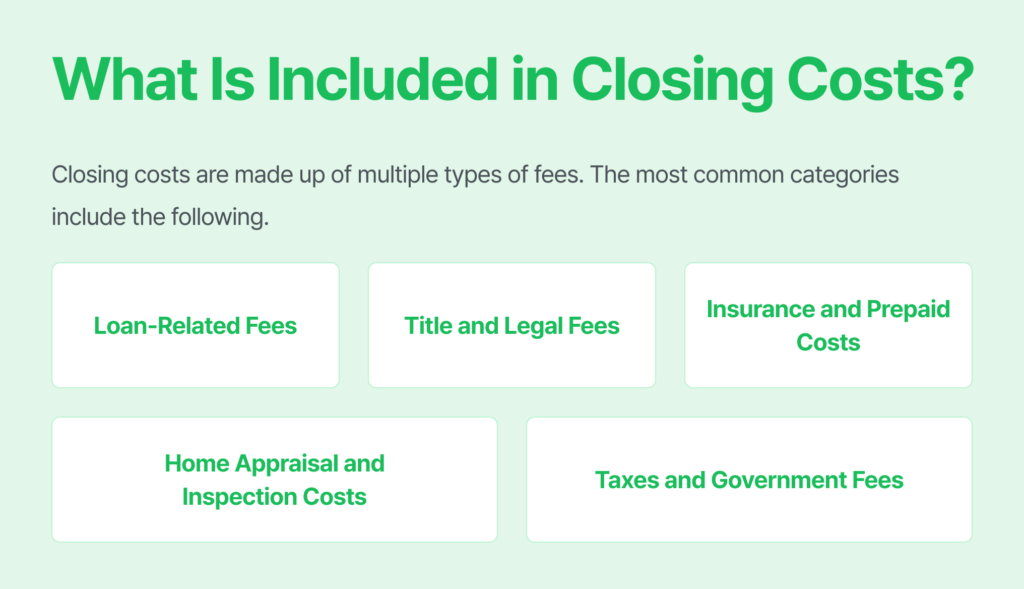
Closing costs are made up of multiple types of fees. The most common categories include the following.
Loan-Related Fees
These fees are associated with processing and approving the mortgage loan.
Common examples include:
- Origination fee
- Application fee
- Underwriting fee
- Credit report fee
These costs are part of the lender’s process for reviewing and approving the mortgage.
Home Appraisal and Inspection Costs
Lenders require confirmation of the property’s market value.
Typical costs include:
- Appraisal fee
- Home inspection fee
The appraisal ensures that the loan amount is appropriate relative to the home’s value.
Title and Legal Fees
One of the most important steps in a home purchase is verifying the legal ownership of the property.
Common title-related fees include:
- Title search
- Title insurance
- Attorney fee
- Recording fee
These steps confirm that the property has no legal claims or unpaid debts attached to it.
Taxes and Government Fees
Local governments may charge certain fees during a real estate transaction.
Examples include:
- Transfer tax
- Recording tax
These fees are used to officially record the transfer of property ownership.
Insurance and Prepaid Costs
Some expenses must be prepaid at closing.
Common examples include:
- Homeowners insurance
- Property tax
- Mortgage insurance
These costs will continue after closing, but a portion is often paid in advance during the closing process.
Who Pays Closing Costs?
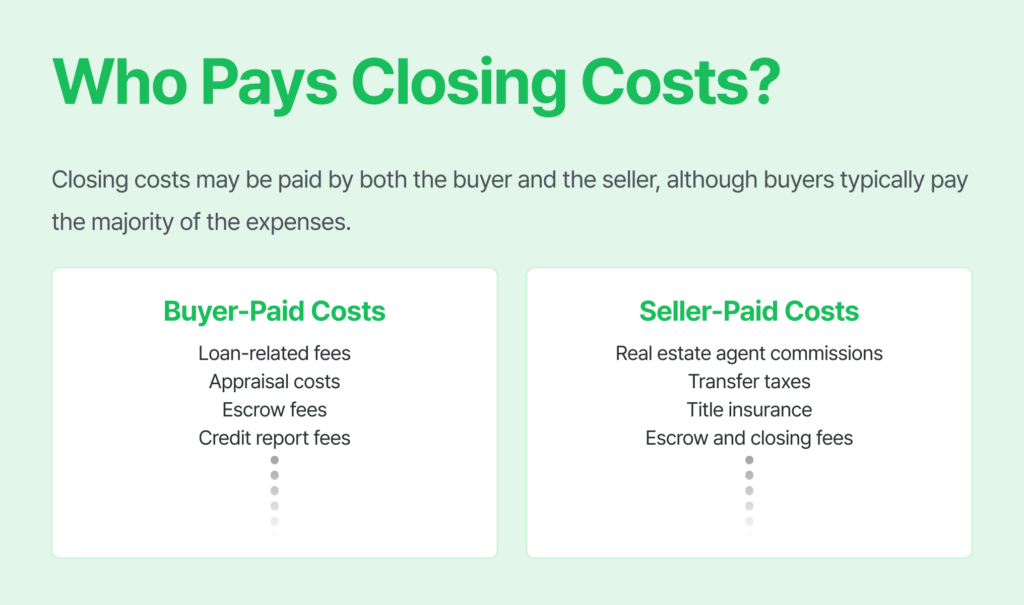
Closing costs may be paid by both the buyer and the seller, although buyers typically pay the majority of the expenses.
Examples of buyer-paid costs include:
- Loan-related fees
- Appraisal costs
- Escrow fees
- Credit report fees
Examples of seller-paid costs include:
- Real estate agent commissions
- Transfer taxes
- Title insurance
- Escrow and closing fees
In some cases, sellers may agree to cover part of the buyer’s closing costs through seller concessions, depending on the negotiated purchase agreement.
When Are Closing Costs Paid?
Closing costs are typically paid on the day of the closing, when ownership of the property officially transfers from the seller to the buyer.
Payment is usually made by:
- Wire transfer to the designated account, or
- A cashier’s check brought to the closing appointment
While a closing cost calculator may provide a rough estimate, reviewing your situation with a mortgage specialist can help you better understand the expected costs before closing.
Closing Costs at a Glance
Closing costs are an important expense to consider when buying a home in the United States.
Key points to remember:
- Closing costs are additional expenses required to complete a home purchase
- They typically range from 2% to 5% of the home price
- They include loan fees, appraisal costs, title insurance, and taxes
- Most closing costs are paid on the closing date
- Some costs may be negotiated during the purchase agreement
If you are planning to buy a home, it is important to consider closing costs in addition to the home price and down payment when planning your budget.
Understanding Closing Costs

Understanding closing costs is not just about knowing an extra fee. It is about understanding the full financial structure of buying a home.
If you are planning to purchase a home, it is important to review the total cost of homeownership, including the home price, down payment, and closing costs.
You can try a closing cost calculator to estimate your potential expenses, or speak with a mortgage specialist to quickly understand the costs involved in your situation.
For a more personalized estimate based on your loan options and location, professional guidance can help clarify the total costs of buying a home.
👉 Learn more about your home buying costs through a personalized consultation