📝 Closing Disclosure (CD): 3-Line Summary
- Compare costs: Carefully compare your initial Loan Estimate (LE) with the final Closing Disclosure (CD) to make sure there are no hidden or unjustified fee increases, including lender fees.
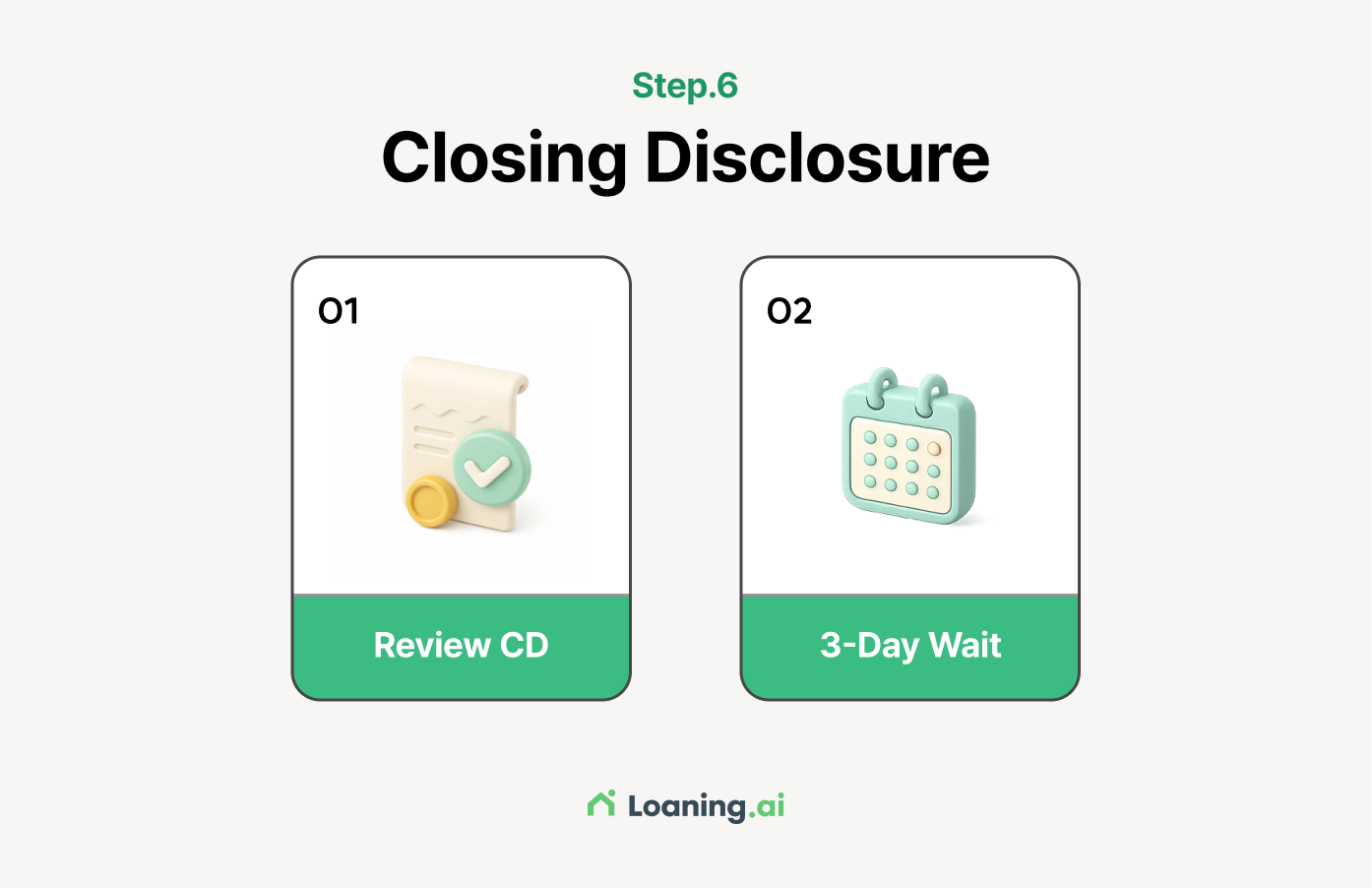
- 3-day waiting period: After signing the CD, a legally mandated three-day cooling-off period begins so the buyer can review the final terms.
- Sign immediately: The 3-day countdown starts only after you sign acknowledging receipt of the CD email. Delaying this acknowledgment can push back your moving date.
At this stage, your lender sends the final major document required for the mortgage process: the Closing Disclosure (CD).
“Why is the interest rate different from what I saw on the LE?”,
“Why do I still have to wait three days?”
If you’ve searched these questions online, you’re in the right place. Today, we’ll break down the critical differences between the LE and CD, and explain the legally required three-day cooling-off period designed to protect buyers.

1. What Is a Closing Disclosure (CD)?
The Closing Disclosure (CD) is your final mortgage statement. While the LE (Loan Estimate) you received at the beginning of your loan application was an estimate of what your costs would likely be, the CD is the final, precise figure down to the last cent. Essentially, it is your actual bill or receipt for closing.
This document contains every final detail of your loan terms:
✓ Monthly principal & interest (P&I)
✓ Closing costs
✓ Cash to close (total amount you must bring to closing)
The CD matters because it is legally binding. Its figures form the basis of your promissory note and are the numbers used for wiring funds to escrow.
2. Discrepancies: Why the Numbers on Your CD and LE Can Differ
It would be ideal for the CD to match the LE exactly, but in reality, small discrepancies are common. Still, there’s a clear difference between reasonable adjustments and charges that require questioning.
Some differences fall under acceptable variances, usually due to technical adjustments made once the actual closing date is confirmed.
| Acceptable Variance | Description |
|---|---|
| Prepaid Interest | Mortgage interest is calculated daily. If you close on the 25th, you only pay five days of interest. If you close on the 5th, you pay 25 days. This varies depending on the exact closing date. |
| Third-party fee adjustments | Title insurance, recording fees, and similar costs are initially estimated by the lender. When the actual invoice arrives from each provider, the CD is updated to reflect the exact amount. |
3. Legal Protection: The 3-Day Cooling-Off Period
Signing the CD doesn’t mean you can buy the home the next day. Under U.S. federal law, lenders must observe a three-business-day waiting period after you receive your CD. This is known as the Cooling-off Period.
It is to give buyers legally protected time to read, compare, question, and fully understand their final loan terms.
Important thing to note: the clock starts not when the CD hits your inbox, but when you electronically sign acknowledging receipt.
Yes. If significant changes occur during the waiting period, a new CD must be issued, and the 3-day countdown restarts.
Such changes include:
1. APR changes beyond the legal threshold (0.125% for fixed-rate loans).
2. Loan product changes (e.g., fixed → adjustable).
3. Addition of a prepayment penalty.
Looking for a Transparent Closing Process?
The mortgage process begins and ends with numbers. More important than any verbal explanation is the exact figure on the documents you sign.
Comparing the LE and CD yourself and catching a hidden fee or 0.1% discrepancy is extremely difficult. The terminology is complex, and the calculations are unfamiliar to most buyers.
Loaning.ai acts as your personal audit team, ensuring nothing is hidden and every change is justified. We help you close your home purchase with full confidence and peace of mind.
📝 Quick Checklist
| Checklist | Details |
|---|---|
| 1. Loan Terms | Do the loan amount and interest rate match the terms you locked in? |
| 2. Monthly Payment | Is the escrow amount (including property taxes and homeowners insurance) accurately reflected, in addition to the principal amount and interest? |
| 3. Cash to Close | Exactly how much money do you need to bring (wire) on Closing Day? (This is the most important number.) |
| 4. Closing Costs | Are there any unjustified increases in lender fees (Section A) or third-party service fees (Sections B and C)? |
| 5. Names | Are your and your spouse’s English names spelled exactly as they appear on your passport/ID? (If the spelling is incorrect, the county recorder may reject your documents and require re-issuance.) |