
Are you wondering whether now is the right time to buy a home in the U.S.?
As of 2025, some regions in the U.S. are experiencing a Buyer’s Market, where conditions are more favorable for buyers.
In this article, we’ll clearly explain what a Buyer’s Market is, recent market trends, and practical strategies for both buyers and sellers.
What Is a Buyer’s Market?
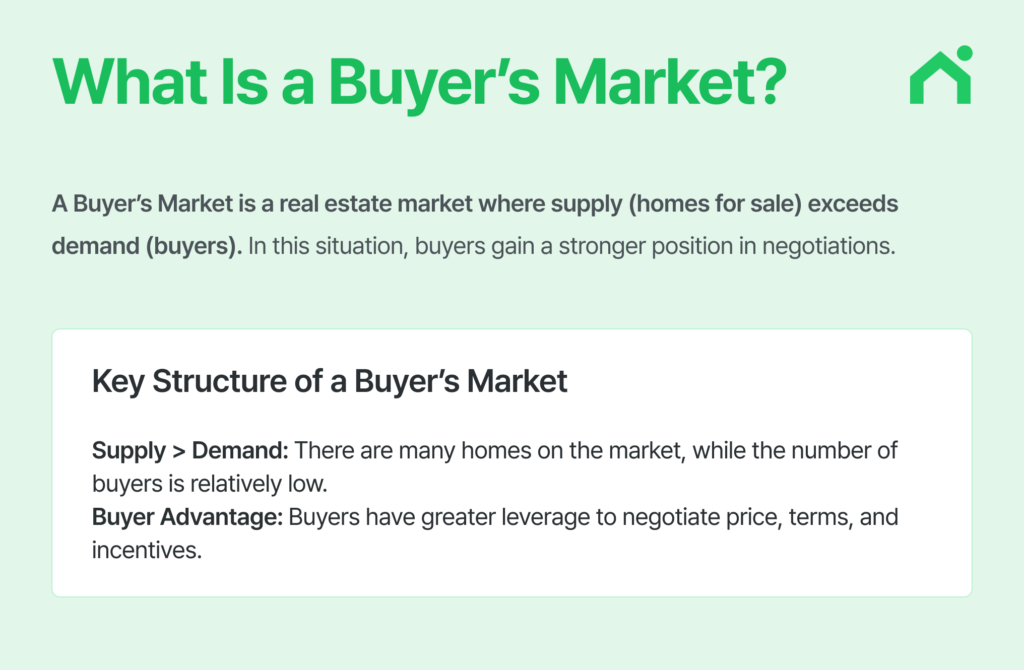
This type of housing market occurs when the number of available homes exceeds the number of active buyers.
In this environment, buyers have stronger negotiating power.
Key Structure of This Market
- Supply > Demand: More homes for sale than buyers
- Buyer Advantage: Greater flexibility to negotiate price, terms, and incentives
Key Characteristics of a Buyer’s Market
| Category | Characteristics |
|---|---|
| Supply & Demand | Listings exceed buyer demand |
| Home Prices | Declining or stagnant |
| Days on Market | Slower sales(homes stay listed longer) |
| Negotiation Power | Strong buyer leverage |
| Incentives | Closing cost credits, repairs, appliances included |
Common Signs in the Market
- Home prices declining or staying flat
- Sellers offering incentives (closing costs, repairs, appliances)
- Homes sitting on the market longer
- Buyers able to request more favorable terms
Why Do These Conditions Occur?
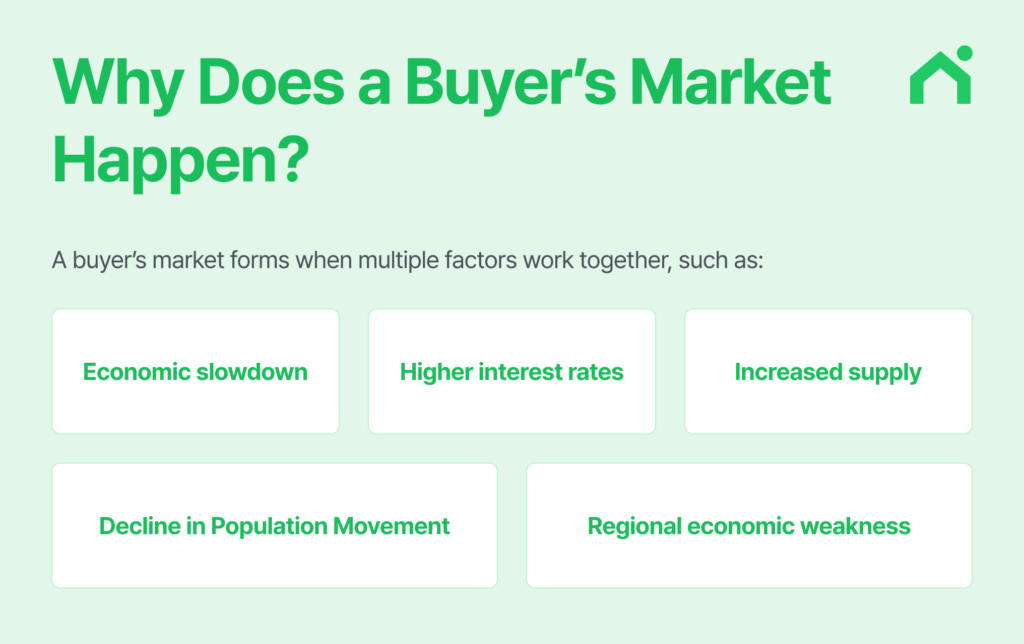
This market usually forms due to a combination of factors:
- Economic slowdown: Reduced consumer confidence and purchasing power
- Higher interest rates: Increased mortgage costs
- Decline in Population Movement: Fewer people relocating
- Increased supply: Growth in new home construction
- Regional economic weakness: Job losses or population decline
What Does the U.S. Housing Market Look Like in 2025? (As of July 2025)
Overall Market Outlook
Nationwide, the U.S. is not fully in a Buyer’s Market. While inventory has increased, demand still matches or exceeds supply in many regions.
- Southern & Western states (e.g. Florida, Texas, Arizona): Clear Buyer’s Market conditions
- Northeast & Midwest (e.g. New York, Boston, Chicago): Still closer to a Seller’s Market
Key Market Indicators
- Inventory growth: +31.5% year-over-year (May 2025)
- Slower transactions: Some regions show over 9.8 months of supply
- Pricing trends: 25–30% of listings show price reductions in certain areas; overall prices mostly flat
Expert Insights
- Platforms such as Redfin and Realtor.com note that while Buyer’s Markets exist regionally, the national market still leans toward seller advantage overall.
Market Summary
| Category | Status((July 2025)) |
| National Average | Balanced to Seller’s Market |
| Parts of South & West | Buyer’s Market |
| Northeast & Midwest | Seller’s Market |
| Increased Inventory | +31.5% YoY |
| Price Changes | Slight decline or flat |
In 2025, Buyer’s Market conditions are regional, not nationwide. Always review local market data before buying or selling.
How Should You Act Under These Conditions?
If You’re a Buyer
- Compare multiple listings before making an offer
- Negotiate for incentives (repairs, closing costs, credits)
- Confirm appraisal value and recent comparable sales
If You’re a Seller
- Price competitively from the start
- Improve home condition (repairs, staging)
- Offer incentives such as closing cost assistance
- Expand marketing channels
Frequently Asked Questions (FAQ)
Q1. Do home prices fall in a Buyer’s Market?
Yes. Increased competition often leads to price reductions or stagnation.
Q2. Are buyers really at an advantage?
Yes. More inventory means greater choice and stronger negotiation power.
Q3. How should sellers respond?
By adjusting prices, offering incentives, and improving property condition.
Q4. How long does a Buyer’s Market last?
It varies by region and depends on interest rates, economic conditions, and population trends.
In Summary
| Category | Summary |
| Definition | A market where supply exceeds demand |
| Key Traits | Lower prices, slower sales, seller incentives |
| Causes | Economic slowdown, high rates, increased supply |
| 2025 Trend | Buyer’s market only in select Southern and Western regions; balanced or seller’s market nationwide |
| Buyer Strategy | Compare listings, negotiate aggressively |
| Seller Strategy | Competitive pricing, incentives, home improvements |
How Much Can You Actually Afford?
Even in a Buyer’s Market, mortgage limits still matter.Check your regional loan limits with Loaning.ai and plan your budget realistically.