
When buying a home in the United States, one phrase you’ll hear often is: “Check the school district.”
But what exactly is a school district, and why is it so important?
In this guide, we’ll explain what a school district is, how it operates, and how it can influence both education quality and home values.
What Is a School District?
A school district is a local administrative unit responsible for managing public schools within a defined geographic area.
School districts are funded primarily through local property taxes, and each district operates independently. Because funding and governance vary, education quality can differ significantly between districts.
Key Characteristics of School District
- Operates as an independent local education authority
- Manages public elementary, middle, and high schools
- Funded largely by local property taxes
- Governed by an elected School Board
- Responsible for curriculum, budgeting, staffing, and policy decisions
What Makes a Good School District?
A strong school district is typically evaluated based on multiple factors, including:
Academic Performance
- Standardized test scores
- Graduation rates
- College acceptance rates
Facilities and Safety
- Modern infrastructure
- Campus safety measures
Teacher Quality
- Teacher credentials and experience
- Student-to-teacher ratio
Community Reputation
- Parent reviews
- Local community satisfaction
Program Diversity
- STEM programs
- Arts and athletics
- Special education services
Helpful resources for researching school ratings include:
How School Districts Affect Home Values Home Values
The district is not just an educational factor — it directly impacts real estate value.
| Impact | Explanation |
|---|---|
| Higher Demand | Homes in highly rated districts attract more buyers |
| Price Premium | Strong districts often command higher home prices |
| Investment Stability | Stable school performance supports long-term property value |
| Faster Resale | Homes in desirable districts tend to sell more quickly |
Even within the same neighborhood, crossing a district boundary can significantly affect home prices.
Important Things to Check Before Buying
When evaluating a school district, make sure to:
- Verify the exact attendance boundary (school zoning maps matter)
- Check recent rating changes — district performance can shift annually
- Use reputable evaluation platforms for objective comparisons
- Consider both school quality and property condition together.
Frequently Asked Questions (FAQ)
Q1. Who determines school district policies?
Each school district is governed by a local School Board, which manages education policy, budgeting, and administrative decisions.
Q2. Are attendance boundaries permanent?
No. Boundaries may change due to population shifts, budget considerations, or rezoning decisions. Always verify the most current boundary information before purchasing.
Q3. How can I check if school district is highly rated?
You can review independent evaluation platforms such as Niche and GreatSchools to compare academic ratings and community reviews.
Q4. How much does school district affect home prices?
Homes in highly rated districts may sell for tens of thousands — or even hundreds of thousands — of dollars more than comparable homes outside the boundary.
Q5. Does school district affect mortgage approval?
The district does not directly impact loan approval. However, homes in stronger districts may hold value better, which can support long-term financing strategies such as LTV planning.
Quick Summary
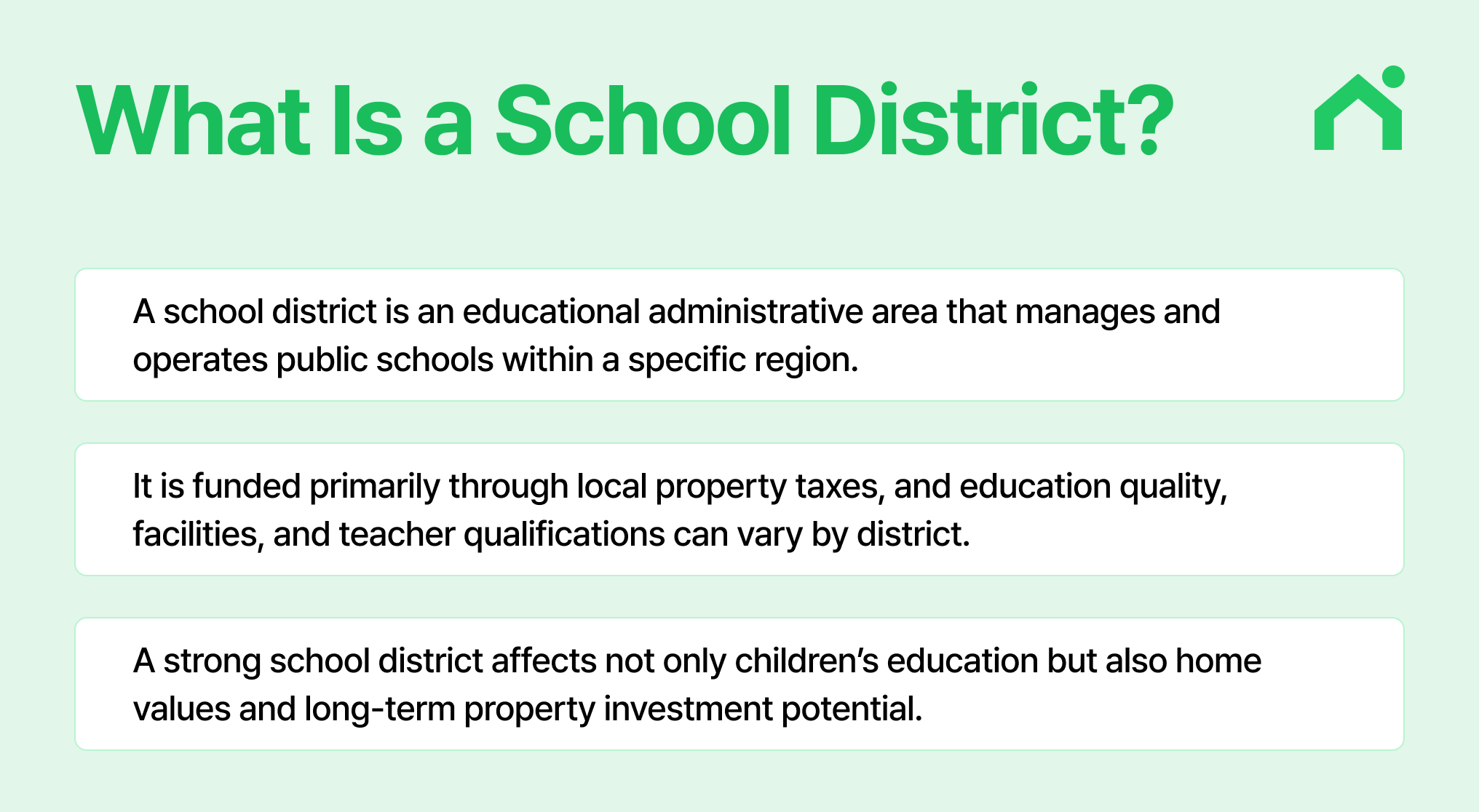
A school district manages schools within a defined geographic area.
Because districts are funded by local property taxes and governed independently, education quality varies. A strong school district can significantly influence home demand, resale value, and long-term investment potential.
For anyone planning to buy a home in the U.S., reviewing district information is an essential step.
Planning to Buy a Home in the U.S.?
District quality plays a critical role not only in education but also in property value and investment stability.
Loaning.ai provides homebuying guidance and mortgage strategies tailored to U.S. real estate markets — helping you make informed decisions with both financing and location in mind.